Honoring the legacy of Paul Walker Schaffel
The Paul Foundation (TPF) was created in 2012 by Ellen M. Walker in memory of her son, Paul Walker Schaffel, and quickly became the founding philanthropic engine behind the Lymphoma Research Foundation’s Adolescent and Young Adult (AYA) Initiative. Through a major early gift and sustained partnership, TPF helped LRF build what has grown into a multi‑faceted national program and, eventually, a first‑of‑its‑kind AYA Lymphoma Consortium
Early support for LRF and creation of the AYA Initiative
Drawing on her expertise as a practicing attorney in New York, as well as unwavering persistence, Ellen established The Paul Foundation in September 2012. She immediately began raising money to fund research and raise awareness of lymphoma in adolescents and young adults—an often underserved and understudied population. One of the early steps she took was to connect with the Lymphoma Research Foundation (LRF). In September 2013, The Paul Foundation made a $400,000 contribution to LRF to honor Paul and became a Founding Sponsor of LRF’s Adolescent and Young Adult Initiative, which aims to support the lives of young people diagnosed with lymphoma. LRF honored The Paul Foundation with the Distinguished Service Award at the LRF 2014 Annual Gala.
“We are proud to be the Founding Sponsor of LRF’s AYA Initiative to honor Paul’s wishes and to create a new mechanism for funding research, which is so important when it comes to learning more about and developing new treatments to address lymphoma in young people,” Ellen explained. “LRF immediately understood our vision and shared our goal to establish dedicated lymphoma resources specifically for adolescents and young adults.”
Origins of The Paul Foundation
Paul Walker Schaffel was a 21-year-old senior at Wesleyan University in 2011 when he noticed his swollen glands. It wasn’t long before Paul’s symptoms worsened, including night sweats, extreme fatigue, and loss of appetite. He returned home to New York to seek medical care, where he was first diagnosed with Hodgkin lymphoma and eventually non-Hodgkin lymphoma. Paul underwent his first round of chemotherapy in December 2011. While in treatment, he continued his studies and graduated with honors in the spring of 2012. In the same year, Paul was accepted to Harvard Law School but succumbed to non-Hodgkin lymphoma before the start of his first year.
Before he died, one of Paul’s final wishes was for his mother, Ellen, to create a foundation to fund research and raise awareness of non-Hodgkin lymphoma so that other young people and their families could get the help they needed. In Paul’s memory, Ellen created The Paul Foundation, a nonprofit with a mission to fund non-Hodgkin lymphoma research and provide those affected by the disease, their families, and healthcare professionals with the tools to identify, treat, and cure non-Hodgkin lymphoma.
“During Paul’s final days, it became clear to him that he was going to die,” Ellen explained. “He wanted to go home while he still could, and about two days before he died, Paul gathered his friends and family and gave each of us a job or two to do. Paul asked me to create a foundation in his name to help make sure that what happened to him would not happen to anyone else. And that’s how The Paul Foundation came to be.”
Expansion into a national AYA platform
From that starting point, The Paul Foundation and LRF worked together to turn Ellen’s personal promise into a national platform for change.
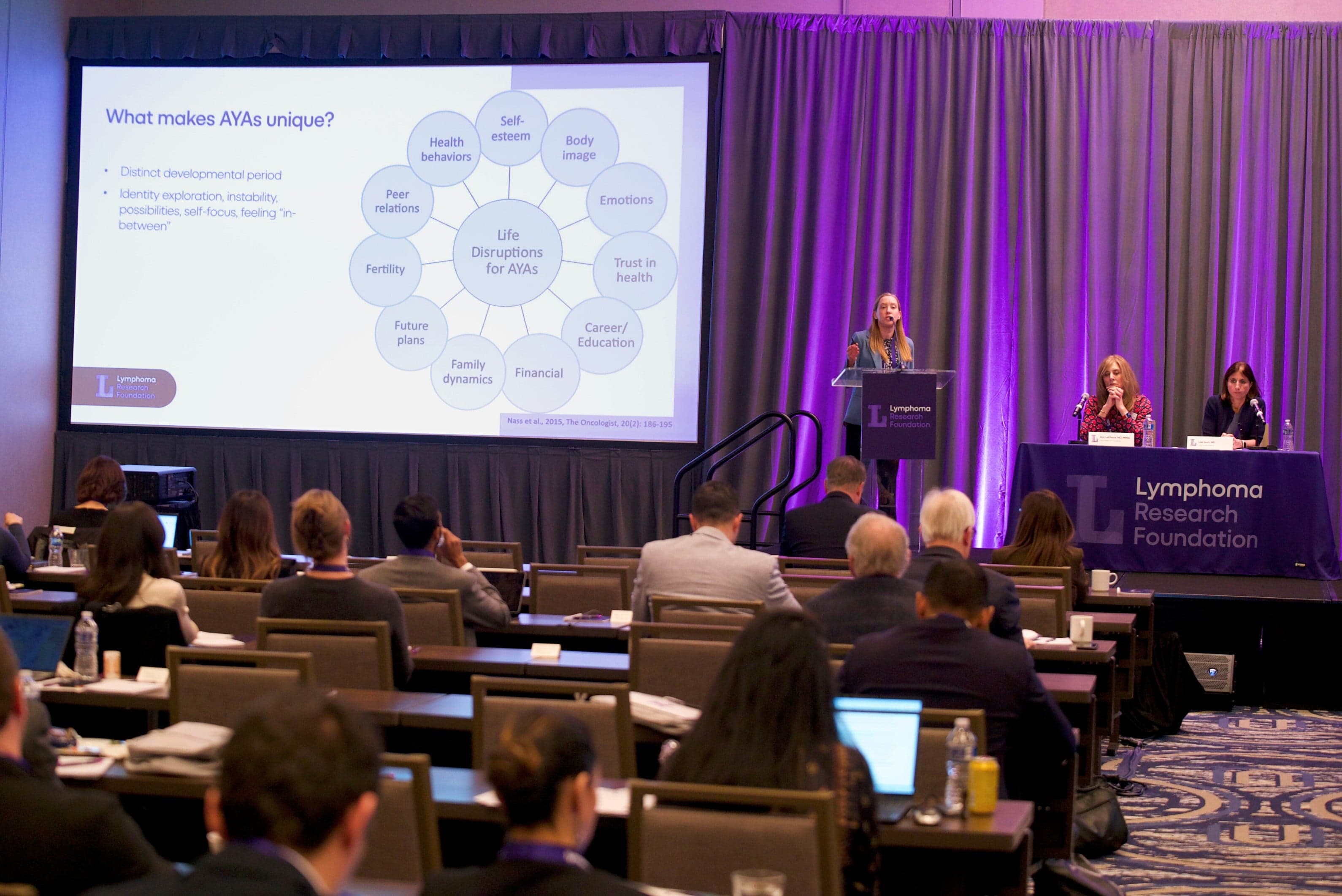
As founding sponsor, The Paul Foundation helped LRF launch their multi‑faceted AYA Initiative in 2014 that created expert-developed resources and programs tailored to adolescents and young adults, emphasized accurate and timely diagnosis, and funded the organization’s first research grants focused solely on the AYA population.
Building on this base, LRF convened a landmark AYA Lymphoma Symposium in 2015, comparing pediatric and adult treatment approaches and mapping research gaps for 15–39‑year‑olds, which led to published recommendations and laid the groundwork for wider awareness and collaboration. In the years that followed, efforts such as the #EraseLymphoma campus campaign and, ultimately, the formal ratification of the AYA Lymphoma Consortium in 2023—backed by nearly one million dollars in commitments from The Paul Foundation—solidified this work as the first and only national consortium devoted specifically to AYA lymphomas, a role recognized when LRF honored The Paul Foundation with its Distinguished Service Award and later elected Ellen to the LRF Board of Directors.
Ellen’s hope is that The Paul Foundation and LRF can help even one mother, like herself, avoid the pain and sadness she endured.
How you can help
By supporting our AYA Initiative, you will help close gaps in lymphoma care and improve outcomes for people ages 15–39.
Adolescents and young adults are more likely to be diagnosed with cancer than younger children, but they remain underrepresented in clinical trials and face distinct challenges related to biology of disease, late effects of intensive treatment, insurance and access, school and work disruption, and long‑term financial and psychosocial stressors.
Your gifts fuel research specifically designed to understand and improve AYA lymphoma outcomes, sustain expert‑developed education and support tailored to this age group, and build comprehensive AYA care models—work that few other organizations are positioned to do at national scale.